
Calcula el precio del transporte gratis
1 lote para entregar
-
 Lot n° 31
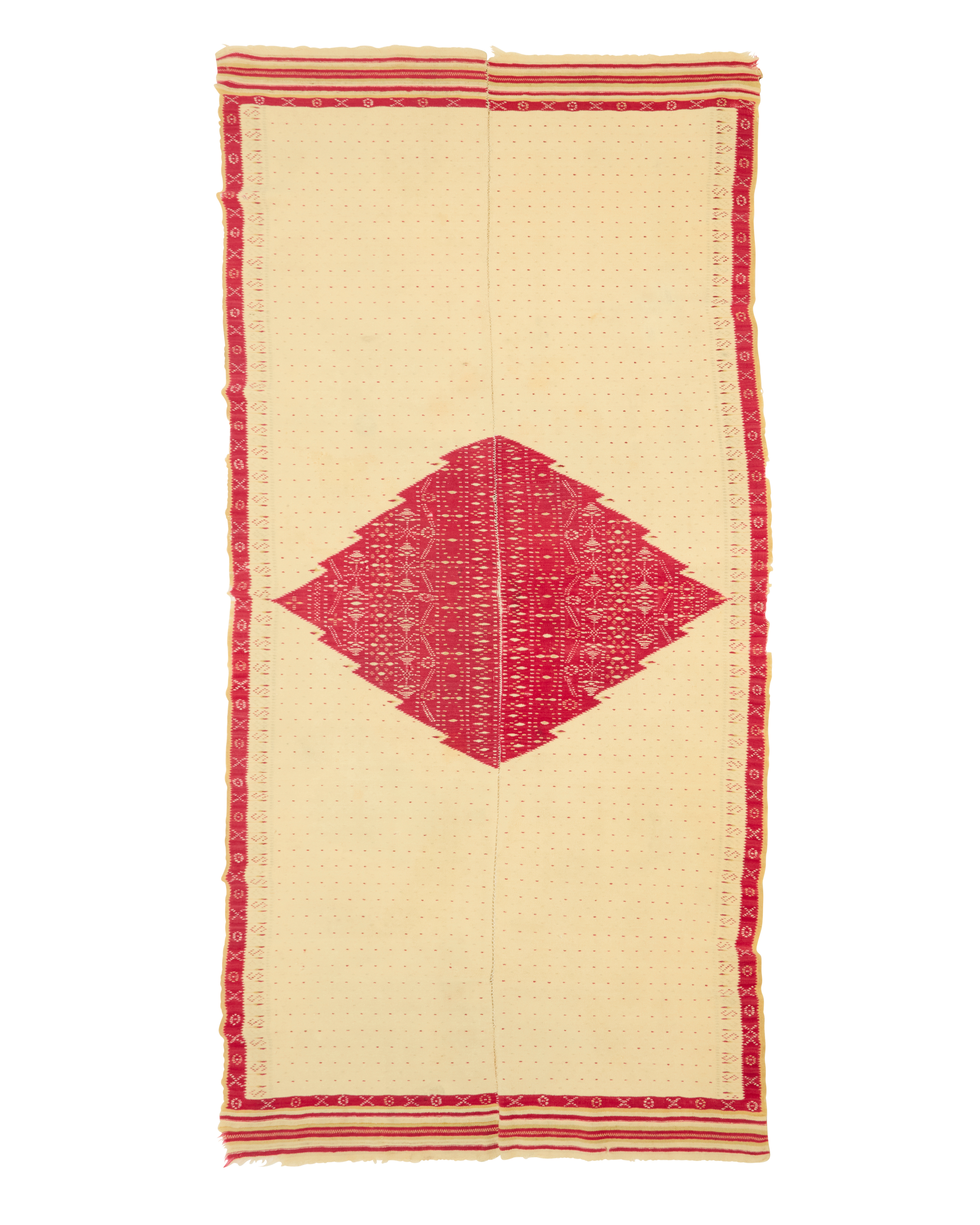
A Mexican Late Classic Period Saltillo sarape Circa 1840-1860 Woven in cream, vegetal yellow, and cochineal red hand-spun wool in two panels seamed down the middle, with a large serrated red diamond to center with elaborate complex ticked motifs, with red and grey ticking to the field, and with a red ticked motif border and striped bands to each end 78" H x 38.75" W approximately Other Notes: Dating to the Late Classic Period (ca. 1840–1860), this sarape represents the final stage of traditional Saltillo weaving before the introduction of imported European yarns and synthetic dyes in the decades that followed. Woven with a cotton warp and hand-spun wool weft, these textiles established the technical and artistic foundation from which later nineteenth-century Mexican sarapes evolved. The present example is dyed with cochineal, the natural red colorant derived from crushed 'Dactylopius coccus' insect cultivated in Mexico since the colonial period. Valued for its rich crimson tones and durability, cochineal remained the principal source of red dye until it was gradually replaced by synthetic aniline dyes after the 1860s. The restrained ivory ground, central diamond medallion, and limited palette are characteristic of the Late Classic Saltillo tradition. With dust accumulation, creasing, and wear commensurate with age and use. Scattered faint stains and small spots, with some small dark marks to center. Scattered small holes and small areas of loose weave, primarily to the center, and to each long edge, with a few narrow areas of loss to each edge, largest: 5.5" L. Areas of loose weave and ravelling to short edges. Center seam with areas of minor loose stitching. With a stitched fabric pole sleeve to one short end.
Lot n° 31
A Mexican Late Classic Period Saltillo sarape Circa 1840-1860 Woven in cream, vegetal yellow, and cochineal red hand-spun wool in two panels seamed down the middle, with a large serrated red diamond to center with elaborate complex ticked motifs, with red and grey ticking to the field, and with a red ticked motif border and striped bands to each end 78" H x 38.75" W approximately Other Notes: Dating to the Late Classic Period (ca. 1840–1860), this sarape represents the final stage of traditional Saltillo weaving before the introduction of imported European yarns and synthetic dyes in the decades that followed. Woven with a cotton warp and hand-spun wool weft, these textiles established the technical and artistic foundation from which later nineteenth-century Mexican sarapes evolved. The present example is dyed with cochineal, the natural red colorant derived from crushed 'Dactylopius coccus' insect cultivated in Mexico since the colonial period. Valued for its rich crimson tones and durability, cochineal remained the principal source of red dye until it was gradually replaced by synthetic aniline dyes after the 1860s. The restrained ivory ground, central diamond medallion, and limited palette are characteristic of the Late Classic Saltillo tradition. With dust accumulation, creasing, and wear commensurate with age and use. Scattered faint stains and small spots, with some small dark marks to center. Scattered small holes and small areas of loose weave, primarily to the center, and to each long edge, with a few narrow areas of loss to each edge, largest: 5.5" L. Areas of loose weave and ravelling to short edges. Center seam with areas of minor loose stitching. With a stitched fabric pole sleeve to one short end.
Nos preocupamos por la privacidad de tus datos. Lee nuestra Política de privacidad.