
Estimate the transport price for free
1 lot to be delivered
-
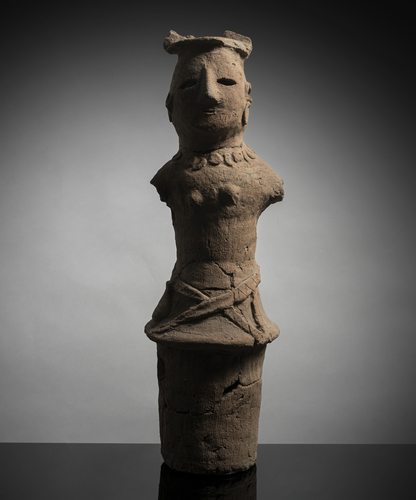 Lot n° 66
Japan, probably Kofun period
H. 64 cm
The figurative Haniwa appears to depict a woman of high rank, with jewellery and a projecting headdress. She is sometimes identified as a holy woman or shaman because of her original distinctive face painting, but it is possible that many different types of women painted their faces during this period.
From an old German private collection
Clay cylinders, so-called haniwa, were sunk around the large burial mounds that were erected during the Kofun period in Japan (ca. 300-538 AD). Their original purpose was probably to mark and protect the edge of the tomb. Many haniwa are decorated to resemble dogs, animals or people; these probably represented the entourage and possessions that the deceased would need in the afterlife. - Part. rep. Fractures and signs of ageing
Lot n° 66
Japan, probably Kofun period
H. 64 cm
The figurative Haniwa appears to depict a woman of high rank, with jewellery and a projecting headdress. She is sometimes identified as a holy woman or shaman because of her original distinctive face painting, but it is possible that many different types of women painted their faces during this period.
From an old German private collection
Clay cylinders, so-called haniwa, were sunk around the large burial mounds that were erected during the Kofun period in Japan (ca. 300-538 AD). Their original purpose was probably to mark and protect the edge of the tomb. Many haniwa are decorated to resemble dogs, animals or people; these probably represented the entourage and possessions that the deceased would need in the afterlife. - Part. rep. Fractures and signs of ageing
We care about your data privacy. Read our Privacy Policy.